Best Bible Reading Order for Beginners (and Why It Matters)
If you’re reading the Bible for the first time, start with the Gospel of John. Then read Mark, Matthew, and Luke before continuing with Acts, James, 1 John, and Paul’s letters. After finishing the New Testament, begin the Old Testament with Genesis, Psalms, and Daniel before moving through the remaining books.
Bible Reading Order at a Glance
- Start with the Gospels: John → Mark → Matthew → Luke
- Continue with Acts: Acts
- Read James and 1 John: James → 1 John
- Read Paul’s letters: Romans through Philemon
- Finish the New Testament: Hebrews through Revelation, skipping James and 1 John since you’ve already read them
- Begin the Old Testament: Genesis → Psalms → Daniel
This order isn’t a rule. It’s designed to give first-time readers a foundation in Jesus’ life and teachings, the early church, and the New Testament before moving into the Old Testament. The sections below explain why I recommend this order and what to expect from each group of books.
Why Start with the Gospel of John?
The Gospels—Matthew, Mark, Luke, and John—tell the story of Jesus’ life, teachings, death, and resurrection. For someone reading the Bible for the first time, they provide a natural introduction to the central figure of Christianity.
If you’re brand new to the Bible, start with the Gospel of John. It’s the easiest to understand and gives a powerful picture of who Jesus is. Next, read Mark, which is the shortest Gospel. Then read Matthew and Luke to see additional details and teachings from Jesus’ life.
You don’t have to read the Gospels in a strict order to benefit from them. What matters most is reading with focus, reflection, and a desire to grow in your understanding of Jesus.
A helpful resource for comparing the Gospels is called a Harmony of the Gospels. It organizes the overlapping events from Matthew, Mark, Luke, and John in chronological order. You can find one online at Blue Letter Bible.
Read Acts after the Gospels
After reading the Gospels, the next book to read is Acts. It continues the story of Jesus’ followers and shows how the early church began to grow.
Luke, the author of the Gospel of Luke, also wrote Acts as its sequel. The story picks up right after Jesus’ resurrection, when he appears to the disciples, ascends into heaven, and sends the Holy Spirit to empower them.
Reading Acts helps you understand the bold faith and struggles of the first Christians—and sets the stage for Paul’s letters that follow.
Read James and 1 John Next
After Acts, two great next steps are James and 1 John. These short letters are easy to understand and filled with memorable truths for new readers.
Most books in the New Testament are epistles (or letters). These writings were sent by apostles to encourage churches and individual believers. Unlike the biographies in the Gospels, epistles give direct spiritual teaching and practical guidance.
- In James, readers learn about faith and works, resisting temptation, and the power of prayer.
- In 1 John, readers discover how to walk in the light, avoid loving the world, and test false teachings.
What Order Should You Read Paul’s Letters?
The apostle Paul wrote 13 of the 27 New Testament books. His letters—also called epistles—include some of the most quoted passages in the Bible, like the “love chapter” in 1 Corinthians 13.
New readers may find Paul’s writings a bit complex at first, but they become easier with practice, prayer, and tools like a good study Bible. Best Bible Commentaries has a great chart that compares different study Bibles—over 50 of them.
Paul’s letters in New Testament order (based on length):
- Romans
- 1 Corinthians
- 2 Corinthians
- Galatians
- Ephesians
- Philippians
- Colossians
- 1 Thessalonians
- 2 Thessalonians
- 1 Timothy
- 2 Timothy
- Titus
- Philemon
If you’re new to Paul’s letters, you don’t have to read them in the order they appear in the Bible. A beginner-friendly order is Ephesians, Philippians, Colossians, Philemon, 1 Thessalonians, 2 Thessalonians, 1 Timothy, 2 Timothy, Titus, 1 Corinthians, 2 Corinthians, Romans, and Galatians. This starts with several shorter, more accessible letters before moving into some of Paul’s longer and more complex arguments.
Finish the Rest of the New Testament
After Paul’s letters, finish the New Testament books you haven’t read yet. Since you’ve already read James and 1 John, seven books remain.
- Hebrews
- 1 Peter
- 2 Peter
- 2 John
- 3 John
- Jude
- Revelation
Don’t worry if you don’t understand everything in Hebrews or Revelation on your first reading. Both contain material that can be challenging even for experienced Bible readers. Your first goal is to become familiar with these books; deeper study can come later.
What Order Should You Read the Old Testament?
By starting with the three books below, readers will grow in their understanding of God’s creation of the world, sin’s invasion of it, people’s struggles as a result of it, and God’s plan to redeem and overcome it.
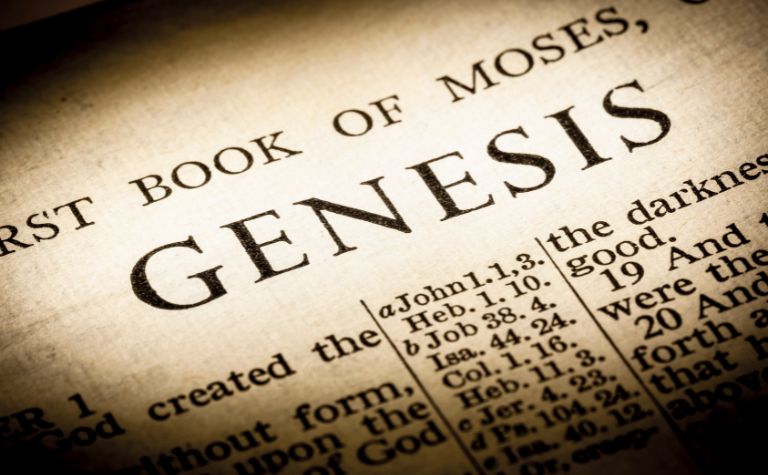
- Genesis: Though Genesis is one of the longest books in the Bible, readers love its stories. The first quarter of the book teaches about the origins of the universe, Earth, people, families, work, and sin. The remaining portion of the book tells readers about the origins of the nation of Israel.
- Psalms: Many Bible readers consider Psalms one of their favorite books because of the beauty of its descriptions and the way it speaks for people who long for God, struggle with sin, and live life in a world infected with sin.
- Daniel: The Old Testament prophet Daniel is a shining example of faithfulness to God. Readers love the stories about Daniel risking it all to stand up for his faith and to survive being eaten by lions because of God’s intervention.
The Old Testament contains 39 books. Three beginner-friendly options were listed above (Genesis, Psalms, and Daniel), but what about the rest?
Readers can follow the Bible’s table of contents, but if you’re looking for a suggested reading order based on accessibility, here’s a helpful guide. Use it as a flexible framework to explore and study the Old Testament at your own pace.
Continue with the Old Testament in Stages
After Genesis, Psalms, and Daniel, work through the remaining Old Testament books in manageable groups. This gives you historical and literary context before you reach some of the more difficult books.
History and Story
Exodus → Joshua → Judges → Ruth → 1 Samuel → 2 Samuel → 1 Kings → 2 Kings → Ezra → Nehemiah → Esther
These books continue much of the historical story introduced in Genesis, from Israel’s exodus from Egypt through the monarchy, exile, and return.
Wisdom and Poetry
Proverbs → Job → Ecclesiastes → Song of Solomon
These books explore practical wisdom, suffering, the meaning of life, and relationships. You can also continue reading Psalms alongside them.
Law and Additional History
Leviticus → Numbers → Deuteronomy → 1 Chronicles → 2 Chronicles
Leviticus, Numbers, and Deuteronomy explain Israel’s laws, worship, wilderness journey, and covenant with God. Chronicles revisits much of Israel’s history from another perspective.
The Prophets
Jonah → Isaiah → Jeremiah → Lamentations → Ezekiel → Hosea → Joel → Amos → Obadiah → Micah → Nahum → Habakkuk → Zephaniah → Haggai → Zechariah → Malachi
The prophetic books are easier to understand once you’re familiar with Israel’s history. They address Israel and Judah’s faithfulness to God, warn of judgment, offer hope of restoration, and contain promises that are important throughout the rest of the Bible.
Do Beginners Need a Study Bible?
You don’t need a Study Bible to start reading Scripture, but it can be helpful when you encounter unfamiliar history, customs, places, or difficult passages. Study Bibles typically include explanatory notes, cross-references, maps, timelines, and introductions to each book.
If you’re a beginner, choose a Bible you’ll actually read consistently. You can always use a Study Bible, commentary, or other resources when you encounter passages you want to explore more deeply.
What Should You Do Next?
Once you’ve chosen an order, the next step is deciding how much to read each day. A Bible reading plan can help turn the order above into a consistent daily or weekly habit.
Frequently Asked Questions
❓What is the best order to read the Bible for beginners?
A good Bible reading order for beginners is John → Mark → Matthew → Luke → Acts → James → 1 John → Paul’s letters → the rest of the New Testament → Genesis → Psalms → Daniel → the rest of the Old Testament. This approach starts with Jesus and the New Testament before moving into the Old Testament.
❓Should beginners read the Bible from Genesis to Revelation?
It’s not necessary. The Bible isn’t strictly chronological. Beginning with the New Testament gives clarity about Jesus, which helps you better understand the Old.
❓Is it okay to skip some books?
Yes—for a season. Focus on readable and foundational books first, then build up to more difficult ones like Leviticus or Ezekiel.
❓Where should I start in the Old Testament?
Begin with Genesis, Psalms, and Daniel. They’re rich in story, prayer, and examples of faithful living.
❓ How long does it take to read the entire Bible?
It depends on your pace and plan. Reading the Bible in one year takes about 12–15 minutes a day. But there’s no rush—reading slowly and reflectively can lead to deeper understanding.
❓ Should I use a Bible reading plan?
Yes, a reading plan provides structure and helps you stay consistent. Some plans go chronologically, others topically, and many follow a one-year schedule. Choose one that fits your goals and schedule.
❓ What Bible translation should I use as a beginner?
Beginner-friendly translations include the New Living Translation (NLT) and New International Version (NIV). They’re clear, readable, and accurate. The ESV is also popular for those who want a slightly more literal translation.
❓ Do I need to understand everything I read?
No—and that’s okay. Some parts of the Bible are challenging. Focus on what you do understand and ask God for guidance. Use a Study Bible or trusted resources to help with the rest.